Personal Growth - How Much is Good for You

For all you film-makers and film-viewers out there - I hope you'll link up and share your thoughts.

Thursday, 17 October 2013

Working Title Films - win a chance to pitch to them and to Oliver Parker


 The workshops (max 8 writers per group) will be an opportunity for film-makers to further develop their movie ideas with the director of The Screen Arts Institute, Stephen May.  

Stephen is a writer/director/producer who has worked with the best on both sides of the Atlantic - Castle Rock, Miramax, Ealing Studios, BBC, Tiger Aspect, Working Title etc.  He created and Directed the highly successful MA in Screenwriting & Producing at the University of Westminster,  he is one of two screenwriting tutors at Oxford University, and is the leading validator of screenwriting courses in the UK through the Open University.
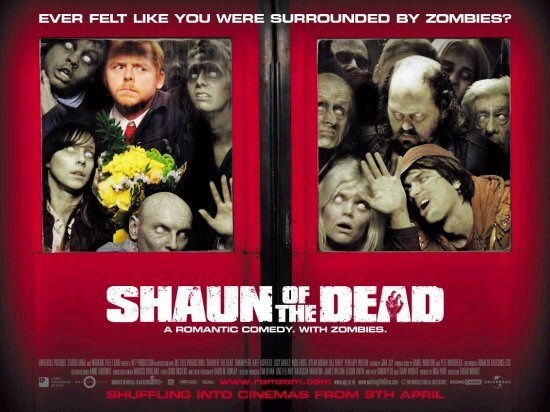
Shaun-of-the-Dead-poster
The Screen Arts Institute has the likes of Working Title's Chairman (Tim Bevan), the writer of "Drive" (Hossein Amini), and the Media Head of the literary agency, Curtis Brown (Nick Marston) as Governors. 

We are a totally pragmatic organisation helping film-makers to shorten the odds of getting their work developed, made and distributed.  And we are looking to recruit film-making talent for our next round of programmes starting in February 2013.

These half-day workshops, in association with Working Title Films, are an excellent opportunity to get a taste of what the Institute has to offer in terms of film development talent and unparalleled integration with the most influential industry leaders in London, LA, New York and Europe.

So it’s a double opportunity; great script development and, for the writer/idea that is considered strongest, a chance at pitching in private and in detail to the development department of the UK’s leading production company and to Oliver Parker.  Oliver made “Johnny English Reborn” with Working Title and is developing a new feature with them this year.  He is a passionate advocate of new story and one of the nicest people in the industry to boot.

Successful applicants who are interested in our full programmes will, in addition, have an opportunity to attend a further session with the Director of the Institute.

If you’d like to take part in one of the WT workshops (one half-day workshop available to any one writer), send the three items below by email to: Stephen.May@thescreenartsinstitute.com

1. A one-pager of your project.
2. The first 10 pages of your script (if available)
3. A CV of relevant professional and educational experience to:

We look forward to reading your work.

The fee for the workshop (including the prior reading and assessment of written materials, plus the extra session with the Director of the Institute) is £89

Successful applicants will be sent details of how to pay in advance.
-------------------------------------------------------------
Of Stephen May and his programmes:
“Exposure to industry professionals was invaluable... ”
Jeremy Wadzinski, Emmy award-winning writer/producer.

“Just a quick note to thank you for inviting me to the workshop.  I've attended a few of these things in my time but this was without doubt the best.”
– Tony Mason, writer

“Most people don't really understand the creative process (or give it an impenetrable theoretical reasoning or have their own weird ideas about it) but you are able to articulate it in a way that makes complete sense and enables your film-makers to focus on what's important. You also nurture talent and don't preach, and you seem to really give a shit. Which is pretty rare.” - Tom Levinge,
writer/director, feature in development with Film London.

“... rammed with ripened wisdom - understanding story structure and character development, the ways of the industry, learning the rules and how to break them, handling criticism, and more importantly (he) teaches you how to apply all these things to your own work.”
Dan Smyth, writer/director – Winner of Cannes Short Corner Jury Award with “Diary of an Online Warrior”; currently developing a feature with Marcie MacLellan productions.

“Congratulations on your great work this year – delighted to be a part of it."
- Nick Marston (Media Director, Curtis Brown Group)

Thursday, 25 April 2013

The Soho Curzon: Rob Kenny gives us a Masterclass

Rob Kenny, Director of Cinema Development

Rob Kenny gives SAI film-makers a tour of the Screen One Projection Room


Last week, Rob Kenny (Director of Cinema Development at the Curzon Group) gave a masterclass to Screen Arts Institute members at the Curzon's flagship cinema on Shaftesbury Avenue.  After 15 years of experience as Director of Operations, Rob has the task of adding 50 new cinemas in the next 5 years.  First up was the Curzon Knutsford.  Rob knows more about indie audiences than probably any man on this island.  Fascinating.

http://www.curzoncinemas.com/coming_soon/
http://www.curzoncinemas.com/about_us/

Thursday, 13 December 2012

Tom Levinge’s “This is Intercourse” screens at London Short Film Festival

Tom Levinge (class of 2012) has his short feature "This is Intercourse" screening at the upcoming London Short Film Festival (January 12th 2013).

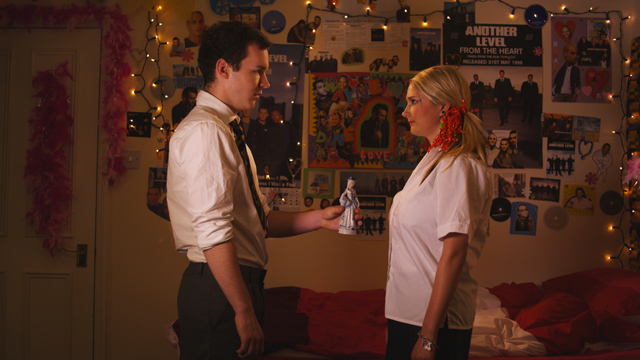
The film is a short comedy about youth, sex and what goes wrong when Susan and Henry are about to have sex. Henry is in love with Susan; Susan is in love with Another Level. 

Told in the style of an educational sex video, with animation, live action and montage, This is Intercourse stars Lizzie Stables (The Inbetweeners) Will Wheeler (Downton Abbey) and David Schneider (I’m Alan Partridge).

http://shortfilms.org.uk/events/2013-01-12-new-shorts-21-dont-make-me-laughttp://shortfilms.org.uk/events/2013-01-12-new-shorts-21-dont-make-me-laugh

Wednesday, 7 November 2012

Stephen May invited to deliver keynote “manga” speech as part of Korean London Film Festival

-->
Stephen May, Director of The Screen Arts Institute, was invited to deliver a keynote speech to promote Korean “manhwa” alongside the launch of the Korean London Film Festival.
“Manhwa” is the less well-known cousin to Japanese manga.   The blockbuster “Priest” was based on a manhwa graphic novel and represents just the tip of an iceberg of storytelling and illustrating talent coming out of South Korea.
The Korean Cultural Centre (Grand Buildings, 1-3 Strand, London WC2N 5BW) is running a three week exhibition of “mahnwa” illustrations and video from November 5th to November 22nd, before the exhibition moves on to New York.
With Korean cinema hitting a resurgence over the last ten years and films such as “Oldboy”, “Musa” and “Memories of Murder” wowing international audiences – will manhwa take on the might of Marvel and DC and compete head-to-head with the US and Japanese gaming/webtoon industries?
Check the links below for an mp3 of Stephen May’s speech and links to some of the best of manhwa.
 

Thursday, 25 October 2012

The Skinny on THE most important pitch technique

The only person to do a “proper” study of pitching technique and successes  is Kimberley D. Elsbach.
Her findings were published widely in the Harvard Business Review in 2003.  Here, below, is her introduction and, if you like the idea, there’s a link to buy the whole article from the HBR – it costs about $5.

She lays out the three main stereotypes that are considered “creative” by the catchers.  Take the whole thing with a very big pinch of salt, in my opinion.

BUT here is a point she makes that we should all take VERY seriously indeed:

“Unfortunately for pitchers, type-based elimination is easy, because negative impressions tend to be more salient and memorable than positive ones.  To avoid fast elimination, successful pitchers – only 25% of those I have observed – turn the tables on the catchers by enrolling them in the creative process.  These pitchers exude passion for their ideas and find ways to give catchers a chance to shine.  By doing so, they induce the catchers to judge them as likable collaborators.  Oscar-winning writer, director and producer Oliver Stone told me that the invitation to collaborate on an idea is a ‘seduction.’”

So the message is very clear.  Hook your catcher as quickly as possible with your passion for the project and the strength of the story elements (more on this at a later date) and then make a very clear invitation to collaborate.  Good luck.  Steve

“How to Pitch a Brilliant Idea”, by Kimberly D. Elsbach, Harvard Business Review, September, 2003.
To order, go to: www.hbr.org

How to Pitch a Brilliant Idea
Before you even know it, the stranger across the desk has decided what kind of person you are. Knowing how you’ll be stereotyped allows you to play to—and control—the other guy’s expectations.
by Kimberly D. Elsbach
Coming up with creative ideas is easy; selling them to strangers is hard. All too often, entrepreneurs, sales executives, and marketing managers go to great lengths to show how their new business plans or creative concepts are practical and high margin—only to be rejected by corporate decision makers who don’t seem to understand the real value of the ideas. Why does this happen?
It turns out that the problem has as much to do with the seller’s traits as with an idea’s inherent quality. The person on the receiving end tends to gauge the pitcher’s creativity as well as the proposal itself. And judgments about the pitcher’s ability to come up with workable ideas can quickly and permanently overshadow perceptions of the idea’s worth. We all like to think that people judge us carefully and objectively on our merits. But the fact is, they rush to place us into neat little categories—they stereotype us. So the first thing to realize when you’re preparing to make a pitch to strangers is that your audience is going to put you into a box. And they’re going to do it really fast. Research suggests that humans can categorize others in less than 150 milliseconds. Within 30 minutes, they’ve made lasting judgments about your character.
These insights emerged from my lengthy study of the $50 billion U.S. film and television industry. Specifically, I worked with 50 Hollywood executives involved in assessing pitches from screenwriters. Over the course of six years, I observed dozens of 30-minute pitches in which the screenwriters encountered the “catchers” for the first time. In interviewing and observing the pitchers and catchers, I was able to discern just how quickly assessments of creative potential are made in these high-stakes exchanges. (The deals that arise as a result of successful screenplay pitches are often multimillion-dollar projects, rivaling in scope the development of new car models by Detroit’s largest automakers and marketing campaigns by New York’s most successful advertising agencies.) To determine whether my observations applied to business settings beyond Hollywood, I attended a variety of product-design, marketing, and venture-capital pitch sessions and conducted interviews with executives responsible for judging creative, high-stakes ideas from pitchers previously unknown to them. In those environments, the results were remarkably similar to what I had seen in the movie business.
People on the receiving end of pitches have no formal, verifiable, or objective measures for assessing that elusive trait, creativity. Catchers—even the expert ones—therefore apply a set of subjective and often inaccurate criteria very early in the encounter, and from that point on, the tone is set. If a catcher detects subtle cues indicating that the pitcher isn’t creative, the proposal is toast. But that’s not the whole story. I’ve discovered that catchers tend to respond well if they are made to feel that they are participating in an idea’s development.
The pitchers who do this successfully are those who tend to be categorized by catchers into one of three prototypes. I call them the showrunner, the artist, and the neophyte. Showrunners come off as professionals who combine creative inspiration with production know-how. Artists appear to be quirky and unpolished and to prefer the world of creative ideas to quotidian reality. Neophytes tend to be—or act as if they were—young, inexperienced, and naive. To involve the audience in the creative process, showrunners deliberately level the power differential between themselves and their catchers; artists invert the differential; and neophytes exploit it. If you’re a pitcher, the bottom-line implication is this: By successfully projecting yourself as one of the three creative types and getting your catcher to view himself or herself as a creative collaborator, you can improve your chances of selling an idea.
My research also has implications for those who buy ideas: Catchers should beware of relying on stereotypes. It’s all too easy to be dazzled by pitchers who ultimately can’t get their projects off the ground, and it’s just as easy to overlook the creative individuals who can make good on their ideas. That’s why it’s important for the catcher to test every pitcher, a matter we’ll return to in the following pages.
“How to Pitch a Brilliant Idea”, by Kimberly D. Elsbach, Harvard Business Review, September, 2003.
To order, go to: www.hbr.org

Tuesday, 16 October 2012

Stephen May chairs panel on Period Drama at LSF 2012

Stephen May (Director of The Screen Arts Institute) is chairing a panel to discuss Period Drama at this year's London Screenwriting Festival (6.30 to 7.30pm on Saturday 26th October).   The panel includes Roland Moore, Chris Hill, Mark Pallis and Kevin Hood.

Check the link for more information.
http://www.londonscreenwritersfestival.com/whats-on/sessions/period-drama

Friday, 12 October 2012

Caroline Bacle's "Lost Rivers" opens Toronto Festival


Caroline Bacle's (Class of 2011) 2011 Green Pitch Winner, "Lost Rivers", opened the 2012 Environmental Film Festival in Toronto two days ago.  Caroline's documentary chronicles the fate of six rivers buried underneath six cities across the globe.

http://planetinfocus.org/festival-films/opening-night-gala-lost-rivers/
http://www.nowtoronto.com/movies/story.cfm?content=188901
http://vimeo.com/50839044

Saturday, 29 September 2012

Kara Smith wins Park Avenue Award and skims an Emmy

Kara Smith (Class of 2010) has won the New York Film Festival's Park Avenue Award for her TV Spec Script "Parole".  The script was also long-listed for an Emmy.  Nice one, Kara.  Mates, spread the word.
https://newyorkscreenplaycontest.com/2012-winners-awards-side-menu

Friday, 28 September 2012

Nick Marston launches "Broken" starring Tim Roth & Cillian Murphy

Tim Roth & Eloise Laurence in "Broken"
Nick Marston (Curtis Brown and Governor of The Screen Arts Institute) has produced "Broken" through his Cuba Pictures shingle.  The movie, starring Tim Roth and Cillian Murphy, will premiere at the London Film Festival in October.  The film is a directing debut for Rufus Norris and introduces the young actress, Eloise Laurence.  Both have been nominated for Best British Newcomer at the Festival.

http://www.curtisbrown.co.uk/broken-and-what-richard-did-included-in-bfi-london-film-festival-lineup/?work=8294

Tuesday, 18 September 2012

Stephen May and Ealing Studios host Script Labs

Stephen May, the Director of The Screen Arts Institute,  in collaboration with Ealing Studios, will be holding two Script Labs during the upcoming London Screenwriting Festival (Sat 27th and Sun 28th October).  16 writers will be chosen from applicants to develop their feature/TV ideas.  The idea/writer that is deemed the strongest will win the opportunity to pitch face to face with Sophie Meyer, Head of Development at Ealing Studios.  All 16 writers who are chosen for the two script labs will have their one-pagers and loglines packaged and presented to Ealing.   Stephen May will promote any stand-out projects to his extensive industry network here and in the United States.

For further information - check the links below.
http://www.londonscreenwritersfestival.com/whats-on/sessions/script-lab-7-8
www.thescreenartsinstitute.com

Sunday, 16 September 2012

Big Story Tricks No.1 - "Make Your Baddy Badder"

Donald Pleasance is Blofelt
Over the years people, movies, novels, stories have handed down to writers a few "tricks of the trade"-  I'm going to pass them on to you.  None of them are new - they're as old as the hills.  None of them are fancy.  They are obvious.  They're not complicated.  They are simple.  Simple and fantastically useful.  In fact, you already know them.  I'm just going to remind you that you do.  This first is called "Make your Baddy Badder" and it is, in my opinion, one of the most important "Tricks" in the bag.  Click the "Read More" link to read on.

Thursday, 2 August 2012

Nick Marston joins the Screen Arts Institute

We are delighted that Nick Marston has agreed to join our illustrious industry council.  Nick is the Chairman of the Media Department at the Curtis Brown Group.

Nick is responsible for several of the largest film rights sales in UK history including his record-breaking deal for "The Horse Whisperer".  He represents directors as well as writers.  His in-house production arm, Cuba Pictures, produced "Boy A" (starring Andrew Garfield & Peter Mullan, winning 5 Baftas) in 2007 and Nick is fast challenging the might of the LA-based majors.

Andrew Garfield in "Boy A"
Check the link for his take on what it takes to be a good agent - and what writers should look for in those that represent them.
http://www.creativeskillset.org/film/stories/development/article_3407_1.asp
http://www.curtisbrown.co.uk/nick-marston/

Tuesday, 17 July 2012

Amy Ricker with "Having You" in post.

Amy Ricker (producer, graduate from Steve May's MA programme in 2011) has a new feature in post, "Having You", starring Anna Friel and Romola Garai.  This is the feature directing debut for the actor Sam Hoare (Captain America, Borgen).
http://www.finitefilmsandtv.com/having-you-film-2012/
http://www.imdb.com/name/nm2397390/

Dan Smyth (writer/director) selected for iFeatures2


Dan Smyth (graduate from Steve May's Screenwriting and Producing programme in 2007) has two reasons to celebrate.  His short, "Gummy Man", has been picked up by the Virgin Shorts Competition and is online.  And his feature, "The Prefect", has been selected for the iFeatures2 programme.  The producer, Marcie MacLellan, is also a graduate from Steve May's MA Programme.

If you want to check out some of the events at iFeatures summer development programme, check the link immediately below.

Good luck, Dan.  Mates, spread the word.


http://www.ifeatures2.co.uk/ifeatures-events-at-the-summer-development-programme.html
http://www.ifeatures2.co.uk/the-16-teams.html
http://danpksmyth.wordpress.com/2012/07/13/new-feature-development-with-ifeatures2/
http://www.virginmediashorts.co.uk/film/2716/gummy-man-rage#.UAVqzpcA4rQ.gmail

Monday, 12 March 2012

The Screen Arts Institute launches "Storytelling for the Screen" Programme

The Screen Arts Institute (London) launched its “Storytelling for the Screen” programme in February this year.   Based in central London’s Portland Place, the programme is designed to help emerging film talent develop, package and sell their movies and TV programmes in the most efficient manner possible.

Ten filmmakers joined us in February to develop feature film projects – and we are looking to recruit new participants for Courses running later in 2012 and for February 2013. 

We are confident that we are running the most pragmatic programme in the country with an ethos that is “shortening the odds of getting your movies/programmes made”.    Our team boasts some of the biggest names in the business.

Our mentors include:

Tim Bevan (Co-chairman of Working Title Films, with a dozen Oscars and some 20 Baftas under his belt)

Hossein Amini (writer; “Drive”, an Oscar nod for “The Wings of a Dove”, and work with Winterbottom, Scorsese, Curtis Hanson and co.)

Olivia Hetreed (writer of “Girl with a Pearl Earing”, Andrea Arnold’s “Wuthering Heights” and is Chair of the Writers Guild Film Department)

Rob Kenny (Director of Operations of the Curzon Cinemas – the holy grail of all indie film-makers)

and Oliver Parker (Director; “Othello”, “An Ideal Husband”, “St. Trinians”)

The Director of Programmes at the Institute is Stephen May who, until January, ran the Masters Programme in Screenwriting and Producing at the University of Westminster.  Programmes under his direction have produced a near 100% record of industry employment for graduates.

If you, or any of your colleagues, are interested in what we are doing, check out this link for more information:

www.thescreenartsinstitute.com

Or contact the Director at:

Stephen.May@thescreenartsinstitute.com

Thursday, 15 December 2011

Graduate wins European 3D Film Mart Competition

Yesterday, Amy Ricker (class of 2010/11) won the EU’s 3D Film Mart Competition with her film “Billy and the Goblin Rebellion”.  The script was developed as her major project on the MA Screenwriting & Producing programme.

The win guarantees her a Euro 3,000 further development deal and links her to financiers, sales agents and distributors.

http://www.3dstereomedia.eu/en/film-festival-mart/3d-film-mart
           http://finitefilmslondon.com/

Tuesday, 25 October 2011

To McKee or not to McKee, that is the question.

So here's the thing.  Has Robert McKee (McKee, R, Story, Methuen, 1999) and all his work made one bad writer a good one?  Or, indeed, a good writer a better one?

Has his work helped one film script, one movie, to be better than it would have been without his influence?

Monday, 3 October 2011

Joanna Hogg - birth of a new auteur.

The writer/director Joanna Hogg has cemented a reputation as an auteur after just two movies ("Unrelated" & "Archipelago").  Working with no script and muttering a “When you’re ready…” rather than screaming “Action!” she’s putting actors at the centre of the creative process.
She’s made a fully-fledged star of Tom Hiddleston ("Thor", "The Deep Blue Sea", Spielberg's "War Horse") and woken the broadsheet critics from their slumbers.  Check the links below for how the hype has hit the polar extremes of The Guardian and Comic-con.

Joanna joins us for a workshop this month.

Wednesday, 29 June 2011

Hossein Amini accelerates away from “Drive”

Ryan Gosling in "Drive', 2011
Hossein Amini’s script for “Drive” helped Nicolas Winding Refn to this year’s Best Director gong at Cannes and Hoss is not slowing up.

This month his script for “47 Ronin” (Keanu Reeves, Rinko Kikuchi) goes into post, and he’s presently scripting “Snow White and the Huntsmen” (Kristen Stewart, Chris Hemsworth, Charlize Theron) for a 2012 shoot.

As well as Refn, Hossein has chalked up work with Scorsese (on Gangs of New York, Winterbottom (Jude), Ian Softley (Hossein was Oscar-nominated for The Wings of the Dove) and John Madden (Killshot).

Hossein will be doing a workshop with the MA Screenwriting & Producing programme next semester.

http://www.imdb.com/name/nm0024925/

Youtube Q & A with Refn and Gosling

http://itccommunicationsnet-johnnichols.blogspot.com/2011/05/cannes-film-festival-2011-best-director.html